The Witches of Zugarramurdi: Spain’s Salem with a Basque Twist

I was on my way to Pamplona when a name I’d once read whispered through my thoughts — Zugarramurdi. Hidden in the green folds of Navarre, right by the French border, this village had been calling my curiosity for years. People called it Spain’s Salem, a place where myth, fear, and faith once collided under moonlit skies.
The road curved through pine forests and mist, and by the time I arrived, the air already felt heavier — as if the hills themselves were keeping secrets.
I left my car by a narrow stone lane, grabbed my camera, and followed the sound of rushing water. The scent of moss and woodsmoke hung in the air. Somewhere beyond the trees, I could hear a stream murmuring its way toward the caves where history and legend still meet.

⚖️ When Fear Became Law
Four centuries ago, the word witch could end a life.
Between 1609 and 1614, the Basque witch trials swept through this peaceful corner of northern Spain. It began with whispers in the valleys — strange gatherings at night, fires burning in hidden meadows, shadows dancing under the full moon.
The Spanish Inquisition took notice. What started as rumor quickly turned into one of the largest witch hunts in Europe. More than 7,000 people were accused across Navarre and the Basque Country.
The accusations painted a chilling picture: women said to have flown through the night, feasted with the devil, and cursed their neighbors. Yet, most of those accused were healers, midwives, and herbalists — people whose only crime was knowing too much about plants, or living a little differently.
In 1610, the Inquisition held a massive auto-da-fé in Logroño. Eleven were condemned; six were burned alive. The rest were forced to repent under public humiliation. The world had gone mad with fear.
But then came an unlikely hero: Alonso de Salazar Frías, one of the inquisitors himself. He began re-interviewing the accused, one by one, and realized how fragile the truth was. There were no witches — only dreams, nightmares, and coerced confessions. His reports were so damning to the Inquisition’s logic that they effectively ended Spain’s witch hunts.
And yet, Zugarramurdi would forever be remembered as the village where the fires burned brightest.
🌑 The Witches of Zugarramurdi and Their Caves
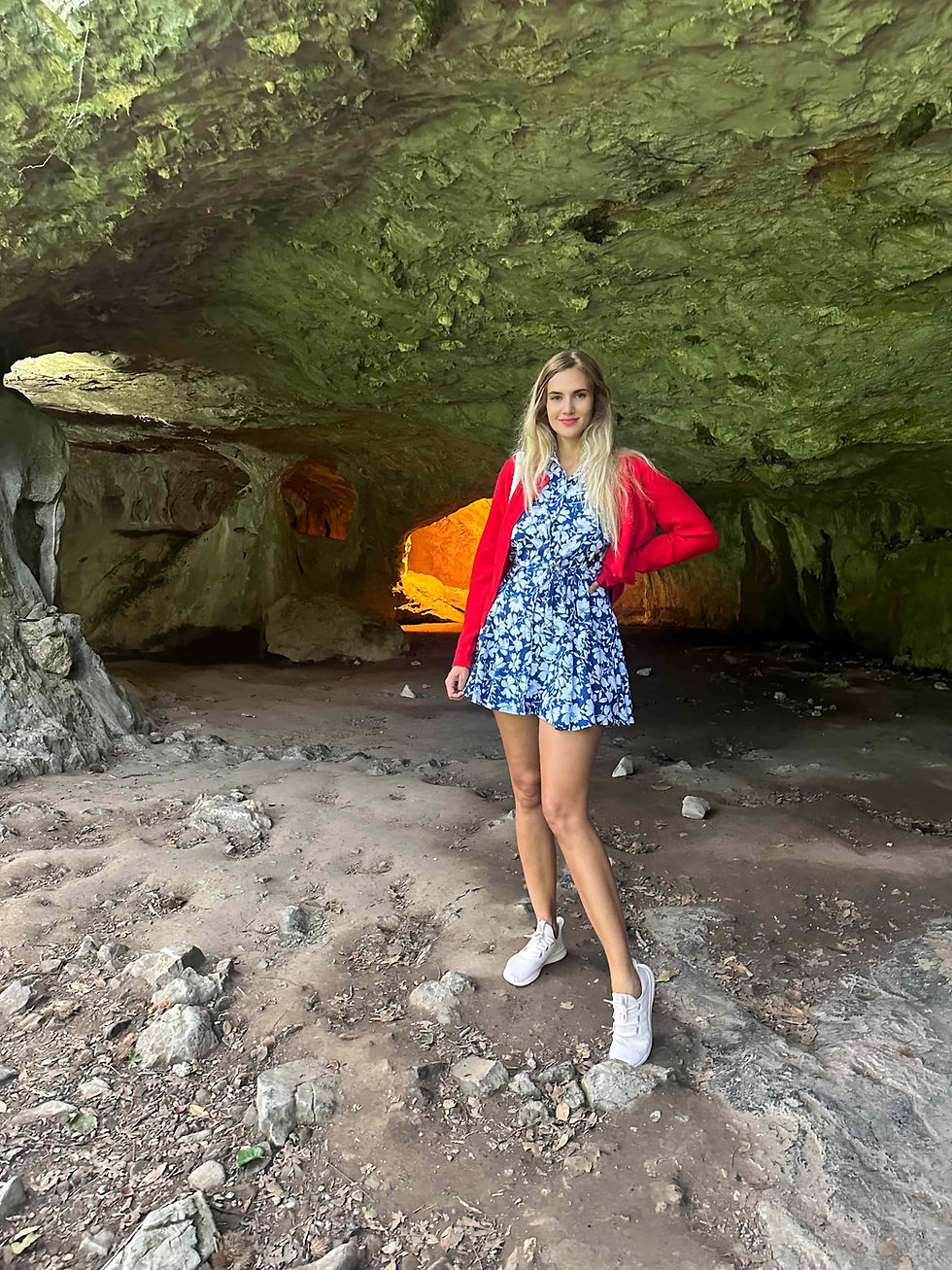
From the village, a winding path leads into the woods. The earth opens suddenly, and there it is — the Cueva de las Brujas, the Cave of the Witches.
The first thing you notice is the sound: water running through stone. The Infernuko Erreka — Hell’s Stream — carved this vast limestone cavern over millennia. Today, it feels like nature’s cathedral.
The main chamber stretches more than 100 meters long, with ceilings high enough to swallow echoes whole. It’s easy to see why people once believed witches danced here. Standing beneath those arches, the air cool and metallic, I could almost hear the hum of old rituals — the flicker of firelight, the rhythm of drums, laughter turning to chants.

Whether any sabbaths truly took place here no one can say. But the imagination doesn’t need much help — the caves are theatrical, wild, and beautiful in a way that defies logic.
Centuries later, the site has taken back its story. Every summer, locals return for Akelarre Eguna, the Day of the Coven — a festival of music, food, and dance that celebrates what once was feared. It’s not witchcraft anymore; it’s remembrance.
There was a strange familiarity in that balance between reason and myth. It reminded me of Goethe’s House in Frankfurt – The Birthplace of Faust. Like Faust’s eternal struggle with temptation and truth, the story of the Witches of Zugarramurdi feels like a living metaphor for how humans wrestle with their own darkness.
🕯️ Inside the Witches’ Museum
Back in the village, the Museo de las Brujas — the Witches’ Museum — preserves that history with grace and gravity. Housed in a 17th-century building, it walks you through daily Basque life before the trials: the herbs people gathered, the stories they told, the quiet rituals of birth and harvest.

Then the tone shifts. The lights dim. You step into the world of accusation and fear. Walls lined with testimonies, drawings of sabbaths, and chilling accounts of the Inquisition’s methods.
One exhibit stopped me cold — a list of names, etched on a panel, of those executed in Logroño. Ordinary villagers, mostly women. Their supposed crimes: dreaming of flight, attending invisible feasts, speaking to the wind.
The museum doesn’t romanticize witchcraft; it restores humanity to those erased by superstition. It’s a quiet act of justice.

🔮 Legends That Refused to Die
The Basque word akelarre literally means “goat’s meadow.” It’s said that witches gathered in such meadows to meet the devil, who appeared as a black goat. Ironically, the term was born from a simple field near Zugarramurdi where goats actually grazed.
Today, locals wear the name like a badge of pride. The caves host concerts and solstice celebrations, and the village turns its once-feared image into folklore and art. Children here grow up hearing stories of spirits and healers not as villains — but as part of their cultural inheritance.
It’s the same story told across centuries in different forms: fear, misunderstanding, redemption.
🚗 Visiting Zugarramurdi
Where it is: Zugarramurdi lies in Navarre, just minutes from the French border and about an hour’s drive from Pamplona or San Sebastián.
What to see:
Zugarramurdi Caves (Sorginen Leizea): a vast natural labyrinth where history and myth collide.
Museo de las Brujas: the museum dedicated to the witch trials and their legacy.
The Village: wander its stone lanes, sip cider in a small tavern, and listen to the wind moving through the hills.
Tips for your visit:
Go early or just before sunset for softer light and fewer crowds.
Bring a jacket — even in summer, the caves are cool and damp.
Pair your visit with a trip to the Urdax or Sara Caves across the French border.
Stay overnight in a casa rural if you can; the Basque countryside at night feels timeless.
🌘 Reflections
Leaving Zugarramurdi, the last light of day spilled across the hills, turning the grass to gold. I thought of the women who once walked this same path, accused of impossible things.
Travel has a way of confronting us with mirrors — sometimes beautiful, sometimes unsettling. This little Basque village, with its haunted caves and quiet dignity, reminded me that history isn’t always written by heroes or kings. Sometimes it’s written by fear — and by those who survive it.
If you’ve followed my other eerie adventures — from California’s Winchester Mystery House to Beverly Hills’ Witch’s House — Zugarramurdi feels like Europe’s forgotten chapter in that same book. A place where legends didn’t just die; they evolved.


Definitely enjoying your travels and stories of around the world. Places I could only wish I can go !
Always enjoy your attentive joy put on places you visit. It is informative and helpful.
You bring so many beauty to the wonderful places you visit. Thank you!
Oh I love Spain I used to live there Madrid long time ago. My mother went to college there. And my nephew is there now studying one semester abroad
Yummy hmu